
Analysis : Humanoid Robots
The Biggest Labor Shift Since the Industrial Revolution

For thousands of years, civilization has been powered by human labor.
Every building, product, road, and supply chain ultimately depends on people performing physical work. But what happens when machines become capable of operating in the human world as naturally as we do?
That is the vision behind humanoid robots. By combining advances in artificial intelligence, computer vision, batteries, and mechanical engineering, researchers are creating machines that can walk, manipulate objects, learn new skills, and perform tasks once thought to require a human worker.
This future is beginning to take shape. Major technology companies and startups are investing billions of dollars into humanoid robotics, while recent breakthroughs in AI have dramatically expanded what robots can perceive, understand, and accomplish. Tasks that seemed impossibly complex just a few years ago are now being demonstrated in laboratories and pilot deployments.
But turning demonstrations into useful products is difficult.
The physical world is messy and unpredictable. A robot must safely navigate crowded spaces, handle unfamiliar objects, recover from mistakes, and operate reliably for thousands of hours. Even when the technology works, it must be affordable enough to compete with human labor.
To understand where humanoid robotics is actually heading, we need to separate marketing from reality and examine the technology, economics, and challenges driving the industry.
In this deep dive, we’ll cover:
• How robotics evolved from fixed industrial machines into general-purpose humanoid systems.
• Why advances in AI have sparked a new wave of optimism for humanoid robots.
• The major technical and economic barriers that still need to be overcome.
• The companies competing to bring humanoid robots from research labs into everyday workplaces.
How we got to humanoid robots
The idea of human like machines is far older than modern robotics.
For centuries, inventors imagined and built mechanical automatons capable of mimicking simple human actions.
The modern robotics era began in the 1960s with industrial robots such as the Unimate. These machines transformed manufacturing by performing repetitive tasks with speed and precision. However, they were highly specialized, operating only in controlled environments and following programmed instructions.
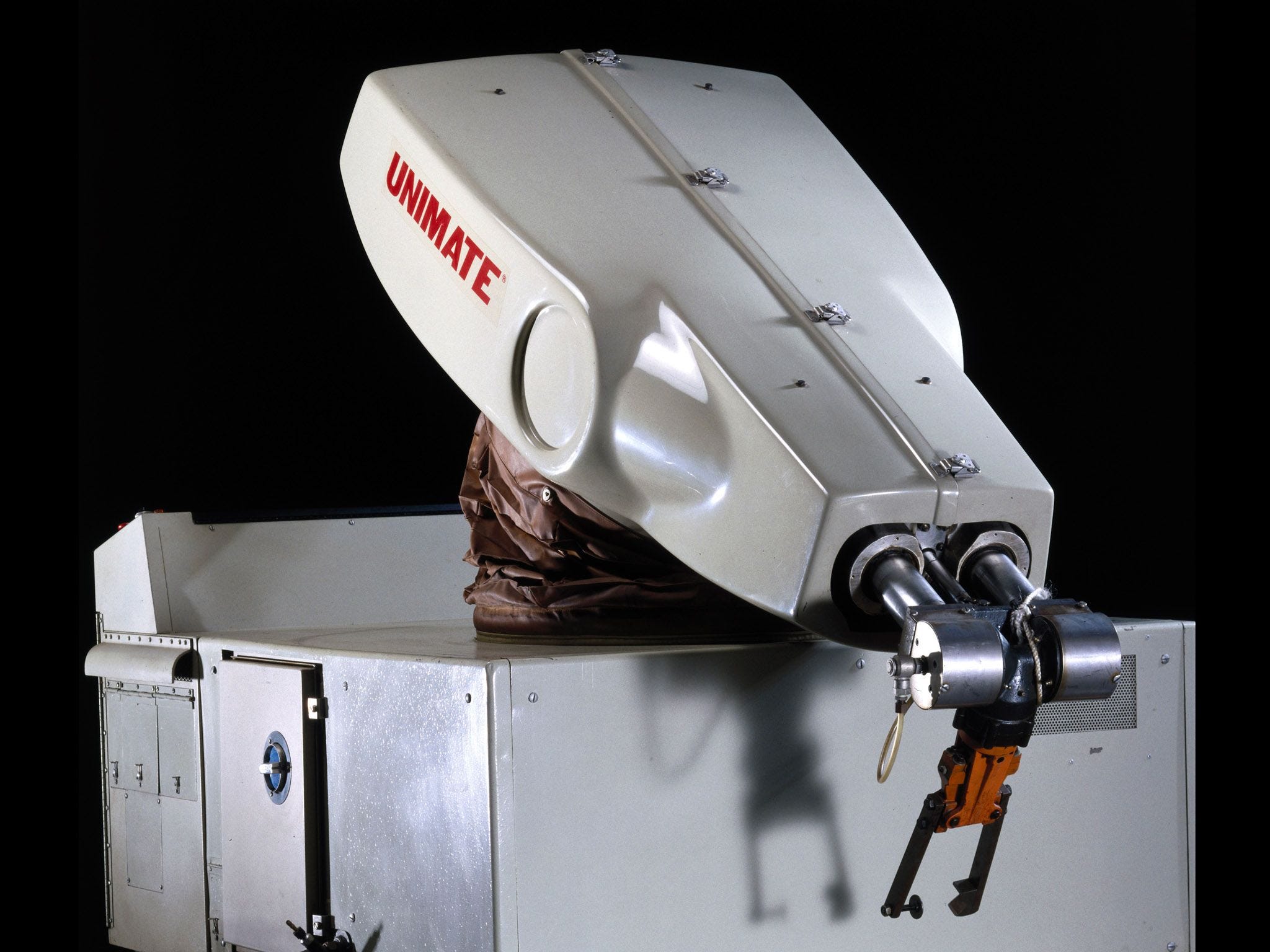
Over the following decades, robotics continued to advance, but most robots remained purpose built. Engineers could design machines to weld car frames, move boxes, or assemble electronics, yet creating a robot capable of handling a wide variety of tasks was not possible.
This led researchers toward humanoid robots.
Because homes, factories, warehouses, and tools are all designed around the human body, many believed the most versatile robot would share a human form. A machine with two arms, and two legs could operate in existing environments without requiring major changes to infrastructure.
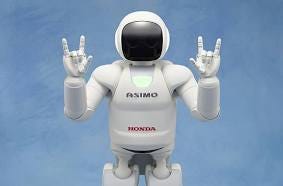
One of the most significant milestones came in 2000 when Honda introduced ASIMO, a robot capable of walking, climbing stairs, and interacting with people. While its abilities were limited, ASIMO demonstrated that practical humanoid locomotion was possible.
Today, collapsing costs of intelligence, and in the electric stack are making this reality possible.
How Humanoid robots work
A humanoid robot has 4 systems that let it function.
Actuators - motors, servoes, devices that convert energy into motion
Control and Software - the brain of the robot
Power - batteries that supply the rest of the robot
Sensors - Lidar, microphones, cameras, anything that lets the robot perceive its environment
Why humanoids will become better
The biggest reason humanoid robots are becoming possible is that every major component of the system is improving at the same time.
A humanoid robot is not powered by a single breakthrough. It is the combination of better sensors, more capable AI models, improved hardware, cheaper computing, and stronger batteries that allows robots to move from controlled demonstrations into real-world environments.
Sensors
A robot can only interact with the world if it can accurately perceive it.
Early robots operated in highly controlled environments because they had limited information about their surroundings. Modern humanoids are equipped with increasingly advanced sensors, including cameras, LiDAR, microphones, force sensors, and inertial measurement units (IMUs).
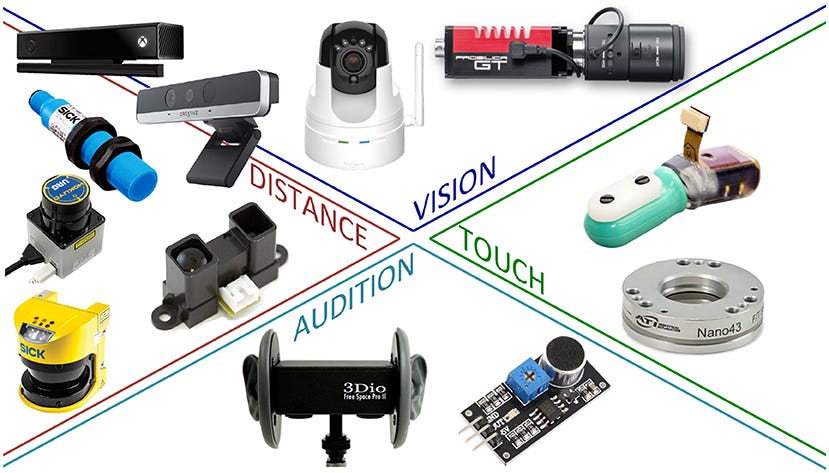
Computer vision systems allow robots to identify objects, track movement, and understand spatial relationships. Force and touch sensors help robots determine how much pressure to apply when handling objects, while balance sensors allow them to maintain stability while walking or carrying weight
AI
Hardware alone does not make a robot intelligent. The biggest recent shift in robotics has come from advances in artificial intelligence.
Traditional robots were programmed with explicit instructions: move this arm to this position, repeat this action, avoid this obstacle. This worked well in factories but failed in unpredictable environments.
Modern AI allows robots to learn patterns from data. Vision models help them recognize objects, language models allow them to understand instructions, and increasingly sophisticated robotics models help translate goals into physical actions.
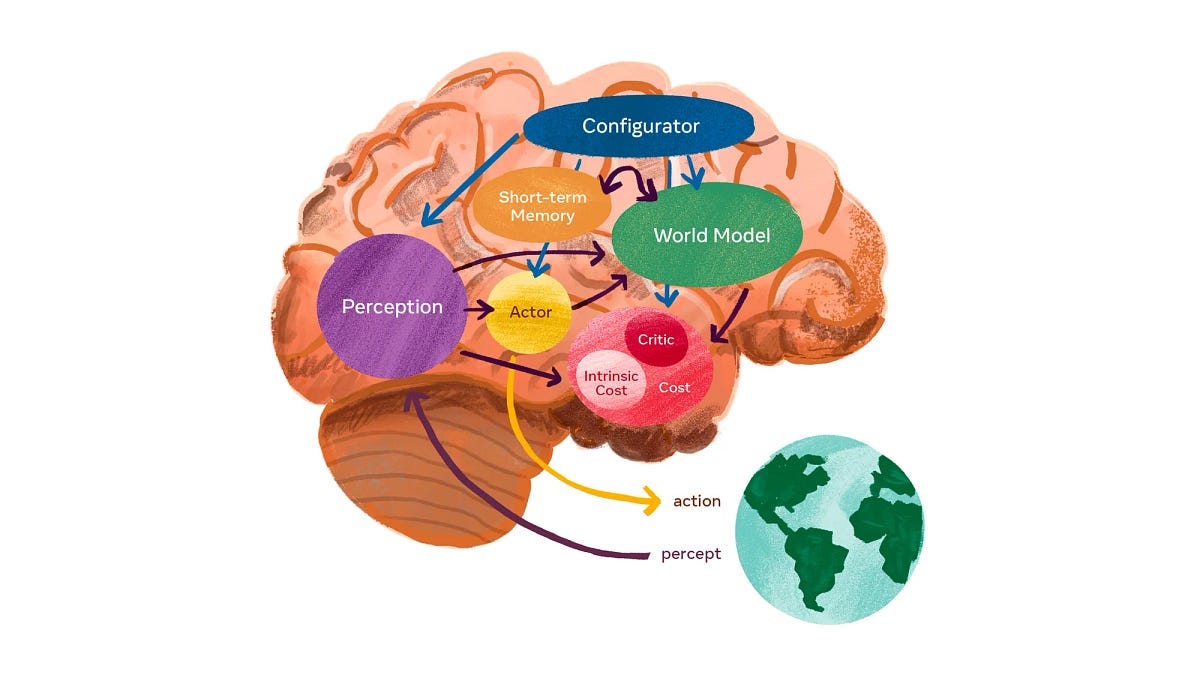
The emergence of “world models” could be especially important. Instead of simply reacting to what they see, future robots may build internal representations of their environment, allowing them to predict outcomes, plan ahead, and adapt to new situations.
Cost Curve
For humanoid robots to scale, they need to become cheaper. Early systems will be expensive, but costs could fall as manufacturing improves and production increases.
Key drivers of cost reduction:
• Falling component costs: Motors, sensors, batteries, and AI chips are benefiting from advances in adjacent industries like EVs and consumer electronics.
• Economies of scale: Mass production will reduce manufacturing costs and improve supply chains.
• Better software: AI-driven learning reduces the need for expensive task-specific programming.
If humanoid robots become affordable enough, they could enter a positive feedback loop: lower costs → more adoption → higher production volumes → even lower costs.
Compounding accelaration
The most important change is that these improvements are happening simultaneously.
Better sensors provide more data. Better AI learns from that data. Better control systems turn decisions into movement. Better actuators and batteries allow those movements to happen reliably.
This creates a positive feedback loop where progress in one area accelerates progress in another.
Humanoid robots are improving not because one technology has finally been solved, but because the entire system is advancing together
Past Failures
Humanoid robotics has gone through multiple waves of excitement, but many companies discovered that building a useful humanoid robot was far harder than expected.
SoftBank Robotics
SoftBank Robotics launched Pepper in 2014 as a social robot designed for customer interactions. Despite early hype and deployments in stores, Pepper struggled to find strong commercial demand due to limited capabilities and high costs. Production was eventually scaled back as the market failed to develop.
Honda
Honda spent decades developing ASIMO, one of the most famous humanoid robots ever created. While ASIMO demonstrated impressive mobility, it remained a research project rather than a commercially viable product, with high costs and limited real-world usefulness preventing widespread adoption.
Current succeses
After decades of slow progress, recent advances in AI and robotics have created a new wave of humanoid companies focused on commercial deployment.
Figure AI
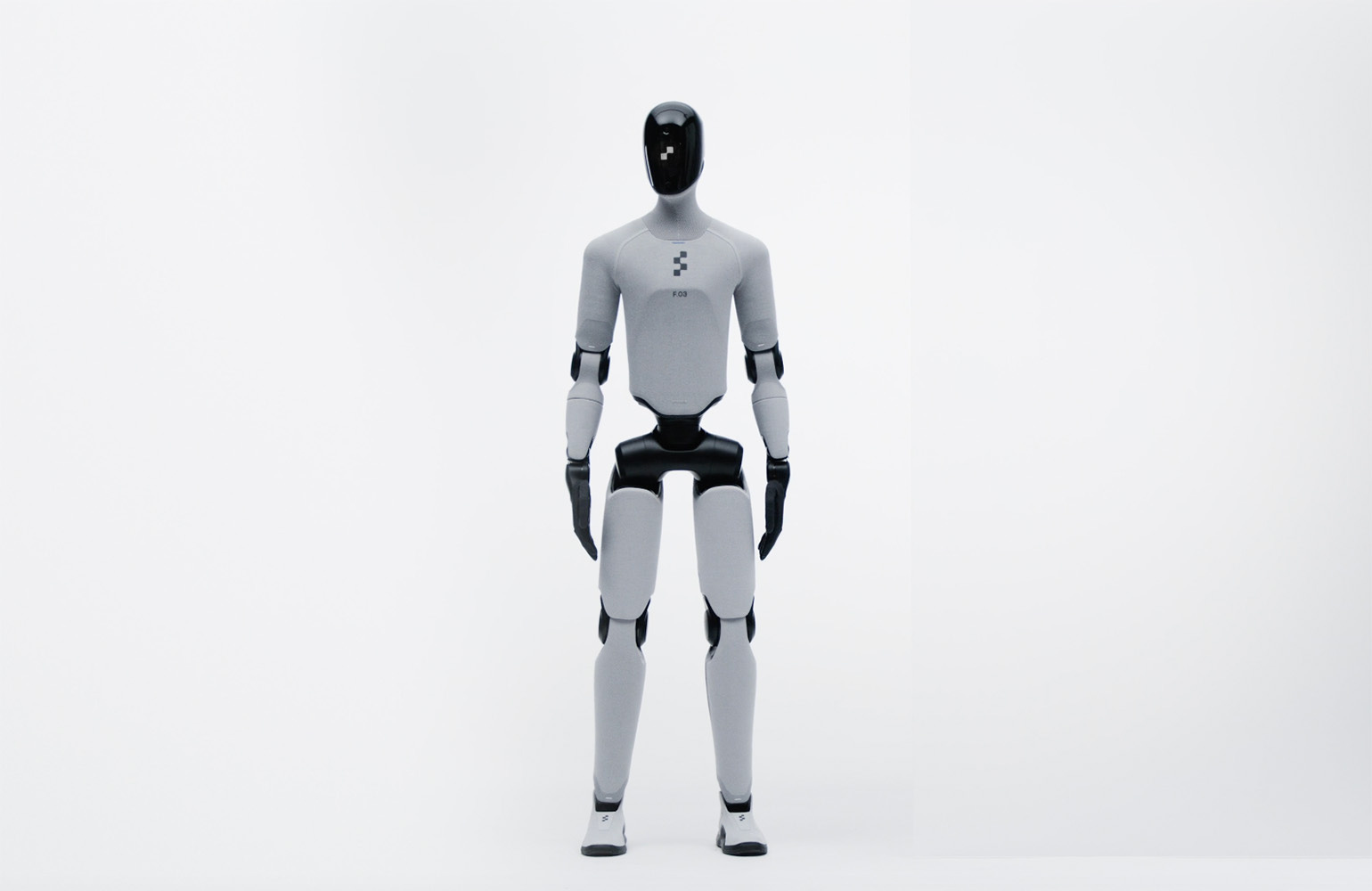
Figure AI is developing general-purpose humanoid robots designed for industrial environments. The company has focused on combining advanced AI models with human-like hardware, aiming to deploy robots in warehouses, manufacturing, and other labor-intensive industries. Its partnerships with major companies have helped accelerate real-world testing.
Tesla
Tesla is developing Optimus, a humanoid robot designed to perform general-purpose tasks. Tesla's advantage comes from its expertise in AI, manufacturing, batteries, and large-scale production, which could allow it to produce robots at significantly lower costs if the technology matures.
Future Outlook
Future Outlook + Timelines
2026–2030
├─ Humanoid robots enter factories and warehouses.
├─ AI improves robot learning and task flexibility.
├─ Manufacturing scale becomes the main bottleneck.
2030–2035
├─ Costs fall through mass production.
├─ Robots expand into more industries.
├─ Companies compete on reliability and deployment scale.
2035–2045
├─ Humanoids become common in industrial environments.
├─ Robots take on increasingly complex physical tasks.
├─ Hardware and AI improvements accelerate adoption.
2045+
├─ Humanoid robots become general-purpose labor platforms.
├─ Robots operate across manufacturing, logistics, and potentially homes.
├─ Robotics becomes a core layer of the global economy.
Key Forecasts
Goldman Sachs
• Estimates the humanoid robotics market could reach significant scale as costs decline and adoption increases.
Morgan Stanley
• Predicts millions of humanoid robots could be deployed globally as AI and hardware mature.
Industry Consensus
• The winners will likely be companies that solve cost, reliability, and large-scale deployment — not just those with the most impressive demonstrations.
Conclusion
While the exact timeline remains uncertain, the direction is becoming clearer. Humanoid robots are increasingly being viewed not as a robotics experiment, but as a potential new layer of physical infrastructure. Just as computers transformed information work and automation transformed manufacturing, advances in AI, hardware, and robotics could transform how physical tasks are performed. The next decade will likely be defined less by impressive demonstrations and more by the companies that can make humanoid robots reliable, affordable, and scalable in the real world.