
Analysis: Brain-Computer Interfaces
The Next Interface After the Smartphone

For most of human history, our ability to interact with technology has been limited by our bodies.
We communicate through speech, keyboards, touchscreens, and physical movement. Every command must pass through muscles before it reaches a machine.
But what happens when technology can connect directly to the brain?
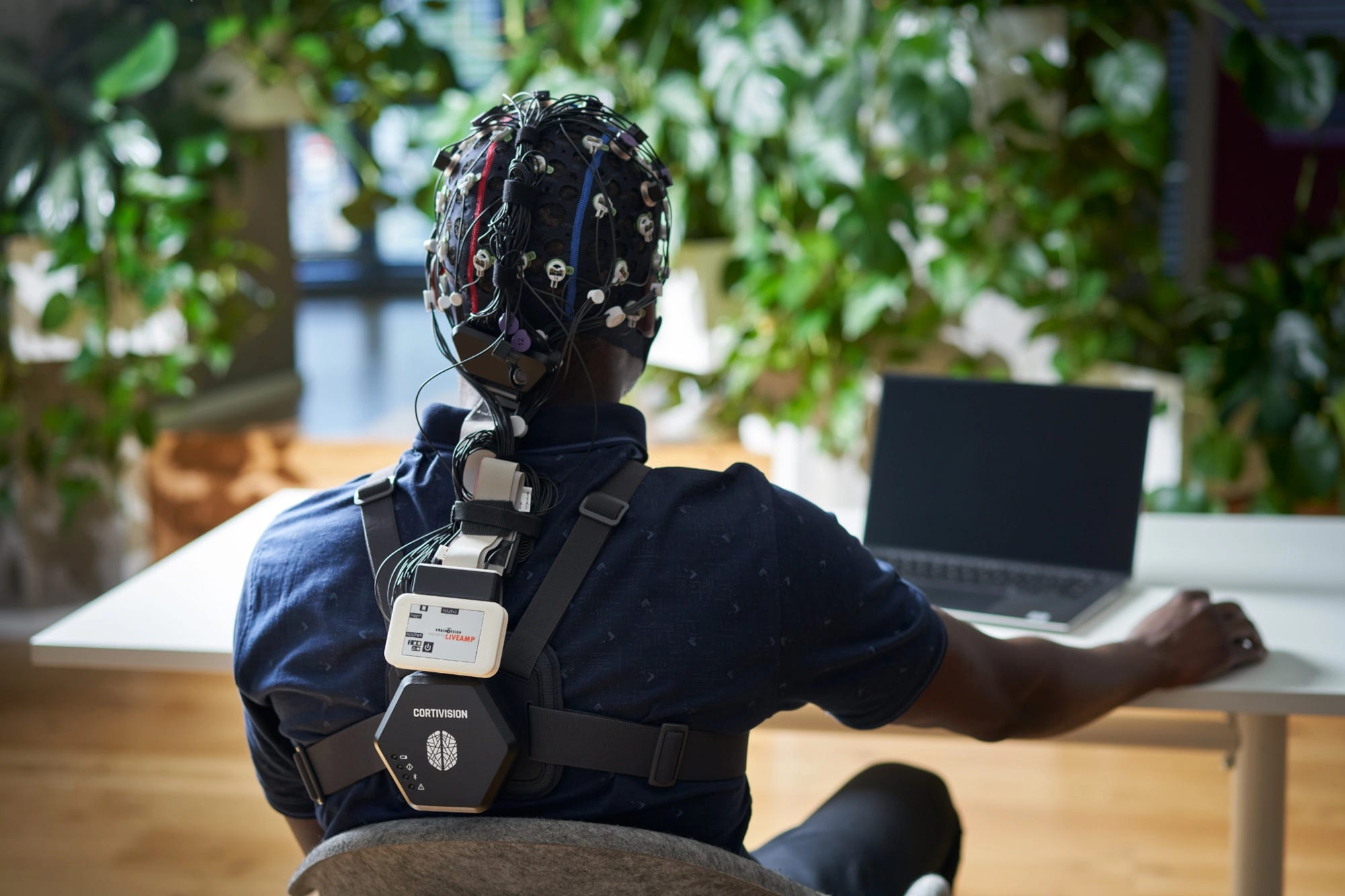
That is the vision behind brain-computer interfaces (BCIs). By creating a direct communication channel between the brain and external devices, researchers hope to allow people to control computers, prosthetics, and even entire digital environments using only their thoughts.
What once sounded like science fiction is rapidly becoming reality. Advances in neuroscience, machine learning, microelectronics, and surgical robotics are making it possible to record brain activity with unprecedented precision. Companies and research institutions are now demonstrating systems that allow patients to type, move robotic limbs, and communicate despite severe paralysis.
Yet the road ahead remains challenging.
The human brain is the most complex system known to science. Building a device that can safely interpret neural signals, operate reliably for years, and deliver meaningful benefits to users is one of the hardest engineering problems ever attempted.
To understand where brain-computer interfaces are actually heading, we need to separate hype from reality and examine the science, technology, economics, and limitations shaping the field.
In this deep dive, we’ll cover:
• How brain-computer interfaces evolved from neuroscience experiments into commercial products.
• Why advances in AI are accelerating progress in neural decoding.
• The major technical and regulatory challenges still facing the industry.
• The companies competing to build the next generation of human-computer interaction.
How We Got To Brain-Computer Interfaces
The idea of connecting machines directly to the brain is older than many people realize.
In 1924, German psychiatrist Hans Berger recorded the first human electroencephalogram (EEG), proving that electrical activity inside the brain could be measured.
For decades, neuroscientists studied these signals primarily as a research tool. While they could observe brain activity, they lacked the computing power necessary to decode it into meaningful actions.
During the 1970s and 1980s, researchers began exploring whether neural signals could be used to control external devices. Early experiments demonstrated that both animals and humans could learn to influence computers through brain activity alone.
The term “brain-computer interface” emerged in the 1970s, but practical applications remained limited.
Major progress arrived in the 2000s through projects such as BrainGate, which showed that implanted electrodes could allow paralyzed patients to control cursors and robotic arms.
Today, advances in AI, semiconductor technology, wireless communication, and surgical robotics are enabling a new generation of BCIs that are dramatically more capable than earlier systems.
How Brain-Computer Interfaces Work
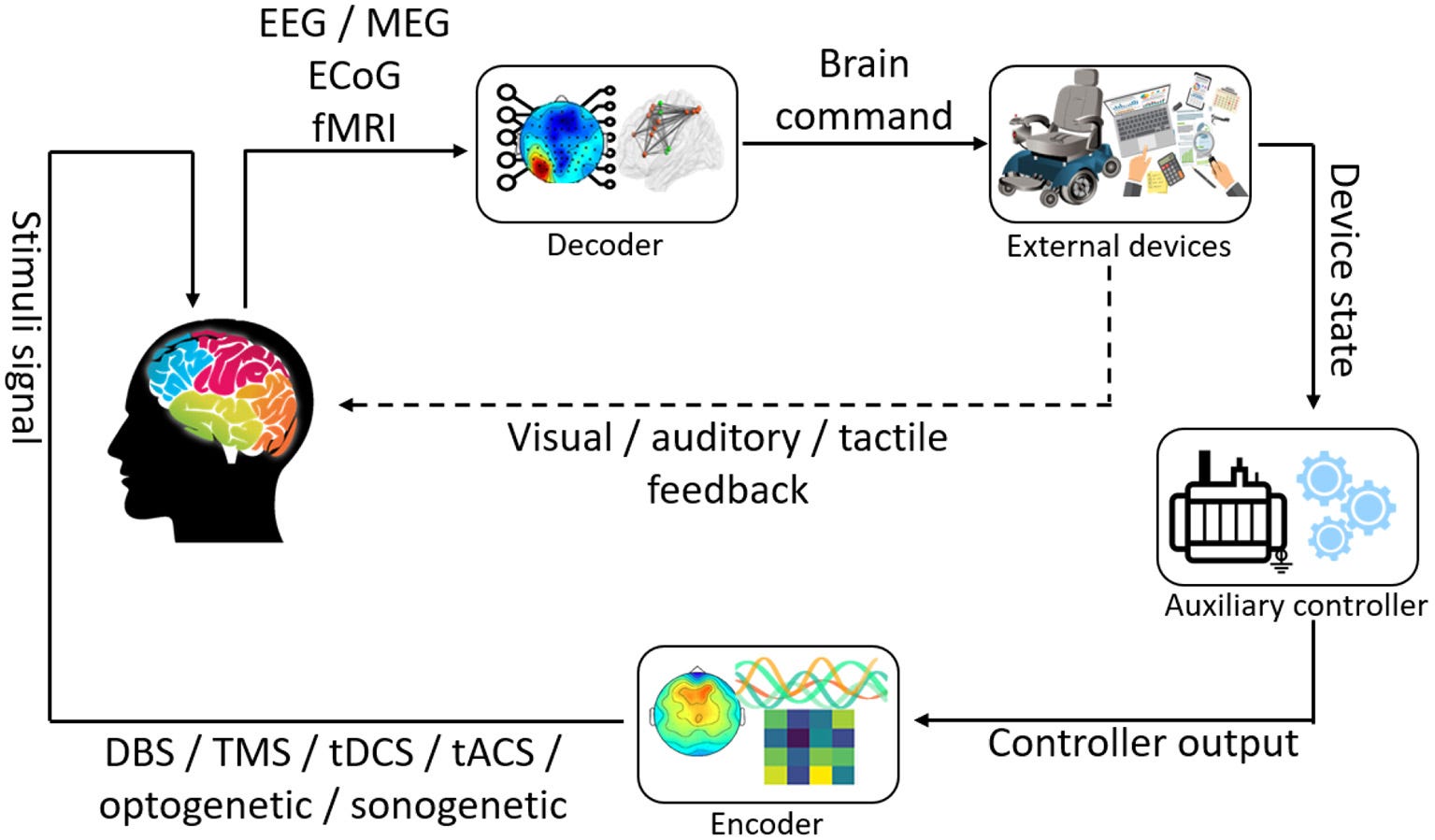
A brain-computer interface consists of four major systems:
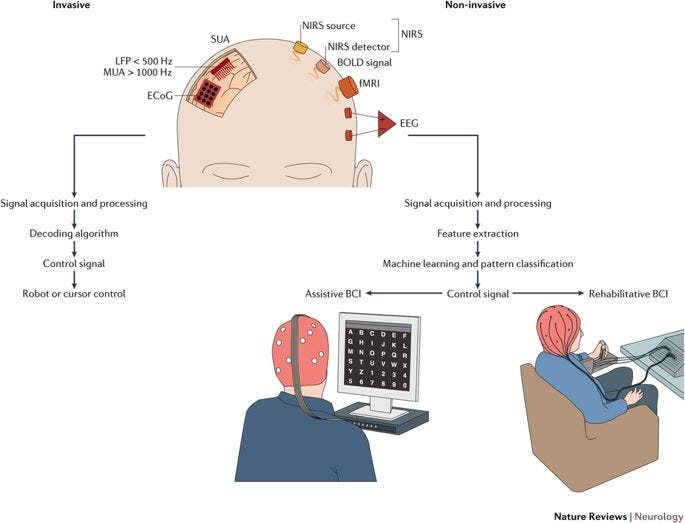
Neural Sensors
Devices that detect electrical activity in the brain.
These may include:
• EEG headsets placed on the scalp
• Electrocorticography (ECoG) arrays placed on the brain surface
• Implanted electrode arrays inserted directly into brain tissue
Signal Processing
Raw neural signals are extremely noisy.
Signal processing systems filter, clean, and organize the incoming data before it can be interpreted.
AI Decoding Systems
Machine learning models analyze neural activity patterns and attempt to determine what the user intends to do.
Examples include:
• Moving a cursor
• Selecting letters
• Controlling a robotic arm
• Generating speech
Output Systems
Once intentions are decoded, commands are sent to an external device.
Examples include:
• Computers
• Smartphones
• Prosthetic limbs
• Wheelchairs
• Augmented reality systems
Why Brain-Computer Interfaces Are Improving
The biggest reason BCIs are advancing is that several critical technologies are improving simultaneously.
Progress is occurring across neuroscience, machine learning, hardware, and manufacturing.
Just as AI accelerated robotics, it is now accelerating neural interfaces.
Neural Recording
The quality of a BCI depends heavily on the quality of its neural data.
Earlier systems could only capture limited signals with low resolution.
Modern implants can record from hundreds or even thousands of channels simultaneously.
Researchers continue to improve:
• Electrode density
• Signal quality
• Wireless communication
• Long-term implant stability
More data allows AI systems to better understand what users are trying to communicate.
Artificial Intelligence
AI may ultimately be the most important driver of progress.
The brain does not generate simple commands like computer code.
Instead, neural activity appears as complex patterns distributed across millions of neurons.
Machine learning models excel at finding patterns within large datasets.
Recent AI systems have dramatically improved:
• Speech decoding
• Motor intention prediction
• Cursor control
• Text generation from neural activity
Several research groups have demonstrated systems capable of translating brain activity into text and speech with increasing accuracy.
As foundation models improve, neural decoding capabilities may improve alongside them.
Hardware Miniaturization
Brain-computer interfaces benefit from the same semiconductor trends that transformed smartphones.
Modern devices are becoming:
• Smaller
• Lower power
• More wireless
• More computationally capable
Advanced chips allow neural processing to occur directly on-device, reducing latency and improving user experience.
Surgical Robotics
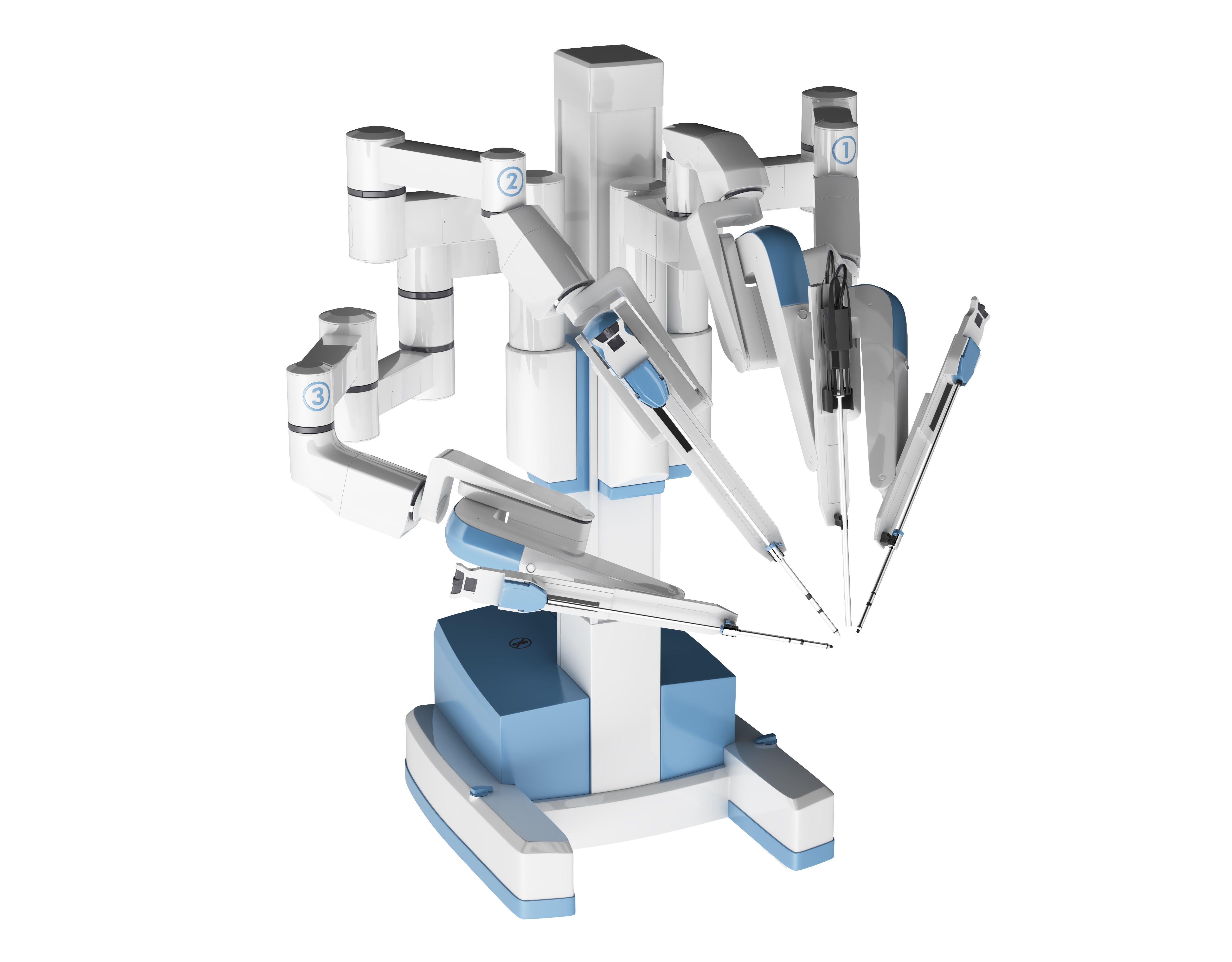
Implanted BCIs require extremely precise placement of electrodes.
Recent advances in robotic surgery are helping reduce risk while improving implantation accuracy.
This is particularly important for next-generation systems that may contain thousands of recording channels.
Compounding Progress
The most important observation is that all of these advances reinforce one another.
Better sensors create more data.
Better AI extracts more information from that data.
Better hardware processes signals more efficiently.
Better surgical techniques make advanced systems more practical.
Progress in one area accelerates progress across the entire ecosystem.
Past Failures
Brain-computer interfaces have experienced multiple hype cycles over the past several decades.
Many early efforts underestimated the challenges involved.
Cyberkinetics
Cyberkinetics helped pioneer implanted BCI systems through the BrainGate project.
While the technology demonstrated impressive capabilities, commercialization proved difficult due to hardware limitations, regulatory hurdles, and the complexity of long-term implantation.
Consumer EEG Startups
Numerous startups attempted to build consumer brain-reading headsets during the 2010s.
Many products struggled because non-invasive sensors could only capture limited information, making it difficult to deliver compelling everyday use cases.
These experiences highlighted a recurring lesson:
Generating impressive demonstrations is much easier than building a scalable product.
Current Successes
A new generation of companies is attempting to solve the challenges that limited previous efforts.
Neuralink
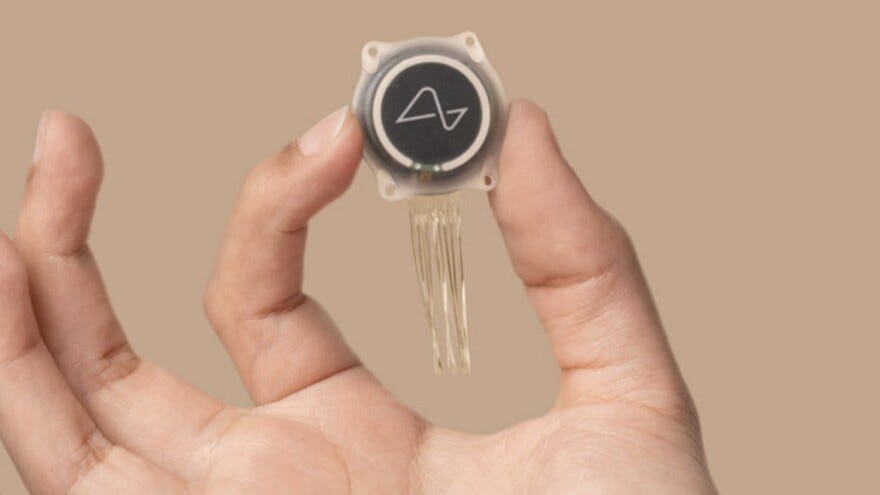
Founded by Elon Musk, Neuralink is developing high-bandwidth implanted brain-computer interfaces.
The company combines custom chips, flexible electrode threads, and robotic implantation systems designed to improve signal quality while reducing surgical complexity.
Recent demonstrations have shown users controlling computers and digital interfaces through implanted devices.
Synchron
Synchron is pursuing a less invasive approach through a device called the Stentrode.
Rather than requiring open-brain surgery, the system is implanted through blood vessels, potentially reducing risk while still enabling neural communication.
The company has focused heavily on assisting patients with severe paralysis.
Precision Neuroscience
Precision Neuroscience is developing high-density neural interfaces designed to record large amounts of brain activity while minimizing invasiveness.
The company aims to create systems that can eventually support communication, control, and neurological applications.
Paradromics
Paradromics is building high-bandwidth neural interfaces focused on restoring communication for individuals with severe neurological conditions.
The company emphasizes data density and neural signal quality as key drivers of future performance.
What We Can Learn
The history of brain-computer interfaces suggests that technical breakthroughs alone are not enough. Many early projects proved that neural interfaces could work, but struggled to become sustainable businesses.
The most successful BCI companies will likely start in healthcare, where the technology delivers immediate value for patients with paralysis, ALS, spinal cord injuries, and other neurological conditions. These markets provide clear demand, strong economic incentives, and a practical path through regulation and reimbursement.
Over time, the biggest opportunities may come from building platforms rather than individual products. Just as smartphones created entire software ecosystems, future BCIs could support communication, computing, prosthetics, and other applications built on top of shared neural hardware and software.
Data may also become a major competitive advantage. Every implanted device generates neural data that can improve decoding models, creating a feedback loop where more users lead to better performance and stronger products.
Ultimately, the winners will probably not be the companies with the most impressive demonstrations, but the ones that can make brain-computer interfaces safe, reliable, affordable, and scalable. The challenge is no longer proving that BCIs are possible. The challenge is turning them into products that millions of people can actually use.
Future Outlook + Timelines
2026–2030
├─ Clinical trials expand.
├─ Communication tools for paralysis improve significantly.
├─ AI dramatically increases neural decoding performance.
├─ Regulatory approvals become a key milestone.
2030–2035
├─ Higher-bandwidth implants enter broader medical use.
├─ Speech restoration systems become increasingly practical.
├─ Hardware becomes smaller, safer, and more reliable.
├─ Competition intensifies among leading BCI companies.
2035–2045
├─ Brain-computer interfaces move beyond healthcare into broader applications.
├─ Neural control of computers becomes more seamless.
├─ AR and wearable computing begin integrating neural inputs.
├─ Long-term implants become increasingly common.
2045+
├─ BCIs become a major computing platform.
├─ Human-computer interaction shifts beyond keyboards and touchscreens.
├─ Neural interfaces merge with AI-powered digital assistants.
├─ The boundary between biological and digital systems becomes increasingly blurred.
Key Forecasts
Morgan Stanley
• Estimates that neurological applications could create a substantial long-term market for brain-computer interfaces as clinical adoption expands.
ARK Invest
• Predicts neural interfaces could become an important platform technology if improvements in bandwidth, safety, and cost continue.
Industry Consensus
• The winners will likely be companies that solve safety, reliability, manufacturing, and regulatory approval—not simply those that demonstrate the most advanced prototypes.
Conclusion
While the exact timeline remains uncertain, the direction is becoming clearer. Brain-computer interfaces are increasingly being viewed not as a niche neuroscience experiment, but as a potential new computing platform. Just as smartphones transformed how humans interact with information, advances in neuroscience, AI, and hardware could fundamentally change how people communicate with machines. The next decade will likely be defined less by futuristic demonstrations and more by the companies that can make brain-computer interfaces safe, reliable, affordable, and useful in the real world.
For most of history, the body was the final border.
Institutions could regulate speech, movement, labor, and access~ but thought remained private. Brain-computer interfaces promise extraordinary liberation for people trapped by paralysis or neurological injury. That is the noble beginning. But every technology that removes a boundary also creates a new territory for power to enter.
The real question is not merely whether machines can read intention. It is who owns the translation.
If neural data becomes the next great platform, then attention, memory, emotion, and desire may become raw material. The same systems that restore speech could eventually classify mood, predict behavior, shape decisions, or place another commercial layer between a person and their own mind. What begins as medicine can become infrastructure. What becomes infrastructure eventually becomes governance.
That does not mean the technology should be rejected. It means the human being must remain sovereign inside it.
The future of BCIs will not be defined only by bandwidth, surgical precision, or decoding accuracy. It will be defined by whether a person using one remains a patient, a customer, a citizen, or becomes a data source connected at the level of thought.
The greatest promise is freedom from the limits of the body.
The greatest danger is losing the last place we were ever truly alone.