
AI Coding Wars, Sovereign Intelligence, Brain Chips, and Drone Delivery
A summary of interesting startup related news this week

1. xAI Is No Longer Building a Chatbot
For most of the AI boom, companies have competed to build better assistants.
This week, xAI launched Grok 4.5, its newest model optimized for coding, agentic workflows, and knowledge work. Rather than positioning it as a general purpose chatbot, xAI is increasingly presenting Grok as infrastructure for software engineering and autonomous digital workers.

The bigger story is that AI companies are beginning to converge on a similar realization: the largest market may not be consumer chat at all.
The most valuable AI systems could be the ones that write software, conduct research, manage workflows, and complete multi step tasks with minimal human supervision. Grok 4.5 was trained alongside Cursor and is being integrated directly into developer workflows, reflecting a broader shift toward AI as a worker rather than simply an assistant.
In addition while many doubt that grok 4.5 is actually mythos class, it does perform similar to opus, for a fraction of the cost.
2. Palantir and NVIDIA Are Building “Sovereign AI”
The first phase of the AI boom was about building larger models.
The next phase may be about deciding where those models live.
This week, Palantir and NVIDIA expanded their efforts around Sovereign AI, a framework that allows governments, defense organizations, and critical industries to deploy advanced AI systems entirely within their own controlled environments. Rather than relying on public cloud providers, organizations can run AI infrastructure on premises while maintaining complete control over data and operations.
This move was likely triggered by various AI companies announcing they will begin making their own chips. This is obviously a huge threat for Nvidia, and we can see their response is the open source nemotron models.
3. China Just Approved the World’s First Invasive Brain Chip
For years, brain-computer interfaces felt permanently stuck in the future.
That future may be arriving faster than expected.
According to a recent analysis highlighted by MIT Technology Review, China has approved what researchers describe as the world’s first invasive implantable brain-computer interface, marking a significant milestone in the commercialization of neural technology. The approval is part of a rapidly expanding Chinese BCI ecosystem that now spans research institutions, clinical trials, and approved medical products.

Most people associate brain chips with science fiction or companies like Neuralink.
The long term significance may be even larger.
Historically, computers have required humans to adapt to machines through keyboards, mice, and touchscreens. Brain-computer interfaces reverse that relationship by allowing machines to adapt directly to human intent.
If the technology continues to improve, the future of computing may involve fewer screens and more direct interaction between minds and machines.
4. Drone Delivery Is Quietly Becoming a Real Business
For over a decade, drone delivery has existed mostly as a futuristic demo.
Now companies are beginning to scale.
This week, Irish startup Manna announced a major expansion into the United States, establishing operations and manufacturing facilities in Tulsa, Oklahoma. The company has already completed hundreds of thousands of deliveries and plans to use Tulsa as the foundation for a broader nationwide rollout.
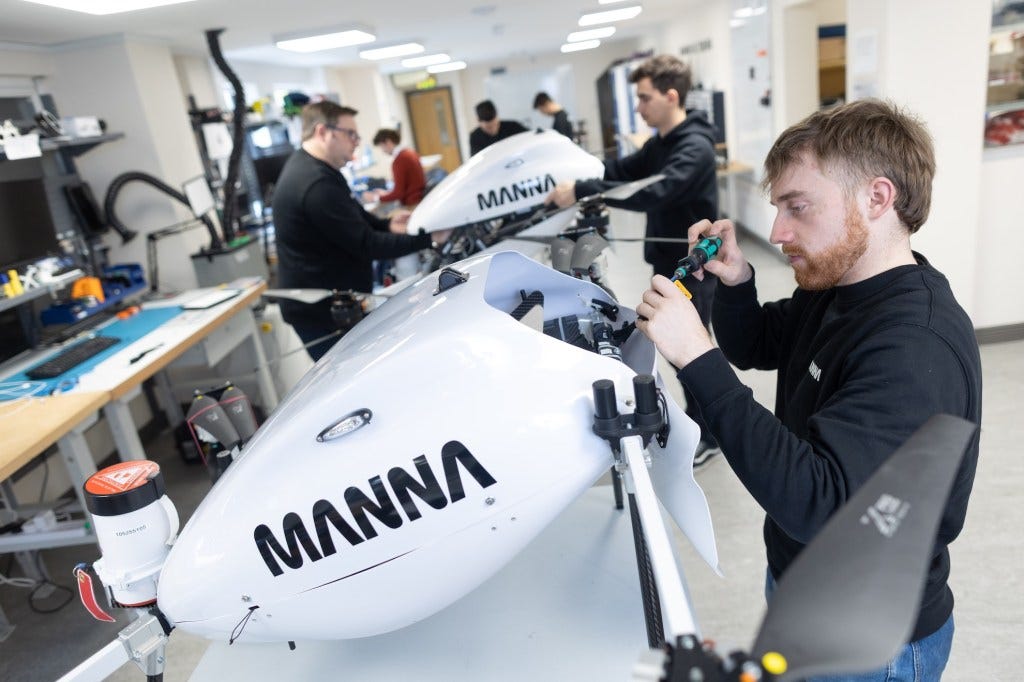
Much of modern commerce is built around the assumption that moving physical goods takes time. Autonomous delivery networks challenge that assumption by dramatically reducing the cost and speed of local logistics. If successful, they could reshape everything from food delivery and pharmacy services to retail and e-commerce.
Other links
New rounds

